

The initial operational cycles for a new Raider on X-Isle are the most critical. This period is a brutal, unforgiving filter that separates disciplined survivors from early casualties. Many new arrivals focus on rudimentary gunplay and looting, neglecting the foundational pillars that truly determine long-term viability. Survival is not an instinct; it is a learned discipline. To transcend the status of mere scavenger and become a true Raider, one must internalize a set of Core Competencies within the first 10 hours of deployment. These are the non-negotiable skills that form the bedrock of every successful operation.
This directive will outline the essential training syllabus for the novice Raider, focusing on the mental and tactical frameworks that must be mastered to ensure that the 10-hour mark is a milestone, not a memorial.
Competency 1: The Principle of Deliberate Movement
The first lesson on X-Isle is that movement is information. Sprinting everywhere is the mark of an amateur; it broadcasts your position to every ARC unit and rival Raider in a wide radius. The foundational skill to learn is Deliberate Movement, which involves a constant, conscious choice between three movement states: sprinting, walking, and crouching. Sprinting is reserved for breaking contact or crossing pre-vetted open ground. Walking is for general traversal between points of interest. Crouching is the default state for approaching any unknown area or potential threat.
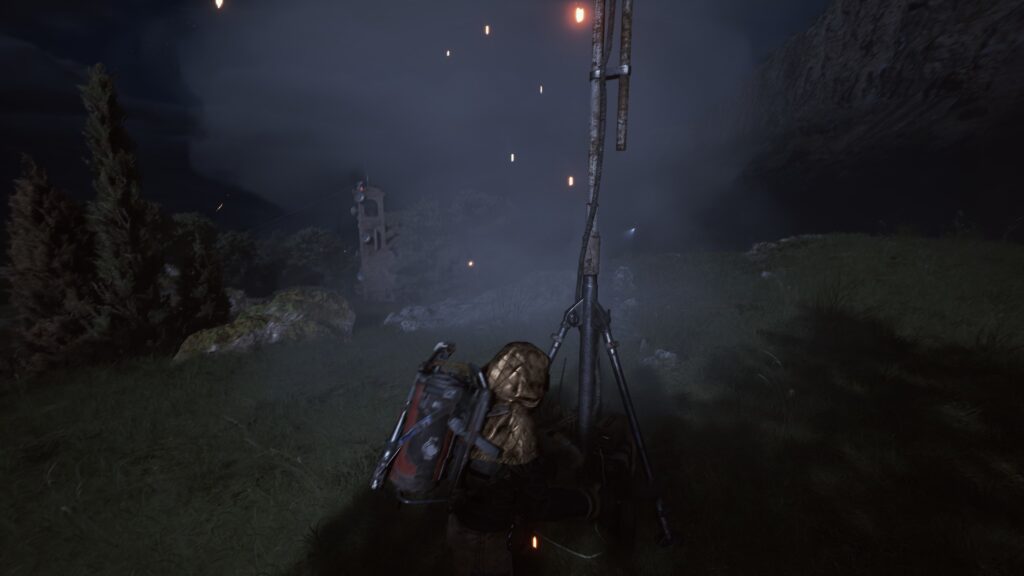
This discipline reduces your audio signature, making you a harder target for ARC’s sensory sweeps and preventing you from blundering into an enemy patrol. It is the first step in shifting from a reactive mindset (“I’ve been spotted!”) to a proactive one (“I will choose when and where I am detected.”).
Competency 2: Systematic Scavenging and Inventory Triage
A new Raider’s backpack is their lifeline, and its mismanagement is a terminal diagnosis. The core competency of Systematic Scavenging moves beyond simply “hoovering” up all available loot. It requires an immediate understanding of inventory triage and value density.
- Identify, then Loot: Do not grab blindly. Quickly scan container contents and prioritize high-value, low-weight items first (e.g., electronics, chemicals, weapon parts).
- Know Your Needs: Before a run, identify a target crafting recipe (e.g., advanced medkit). Actively seek out the components for that recipe, treating everything else as secondary. This provides purpose to your scavenging.
- The “One-in-One-Out” Rule: When your inventory is full, you must learn to drop a low-value item (like basic scrap metal) to make room for a high-value one. A full inventory is not an achievement; an optimized inventory is.
This economic discipline ensures that every successful extraction yields the maximum possible strategic value, accelerating your progression and survivability.
Competency 3: Initial Combat Doctrine – Disengagement over Engagement
The novice Raider is under-equipped and fragile. Seeking combat is suicide. The third core competency is mastering the doctrine of Disengagement over Engagement. Your primary objective in any unwanted encounter with ARC is not to win, but to survive and escape. This is a tactical skill that must be practiced.

A Raider’s first 10 hours are not about kill counts. They are about learning the patrol paths of ARC units, their detection ranges, and the fastest ways to break line of sight. Every encounter should be framed as a lesson in evasion. When detected, the immediate, drilled response should be to deploy a smoke grenade (if available) and sprint towards the nearest piece of hard cover or concealment, then immediately reposition. Learning to run effectively is more important than learning to shoot straight in the early game.
The 10-Hour Development Matrix
This matrix outlines the expected progression of a Raider’s skills, moving from basic survival to proactive operations. It serves as a benchmark for self-assessment.
| Timeframe | Primary Focus | Key Skill Development | Desired Outcome |
|---|---|---|---|
| Hours 1-3 | Avoidance & Evasion | Deliberate Movement, Audio Cue Recognition (basic). | Achieving successful extractions with basic loot; surviving >50% of deployments. |
| Hours 4-7 | Economic Growth | Systematic Scavenging, Basic Crafting, Target Isolation. | Crafting first set of upgraded gear/meds; engaging lone ARC units successfully. |
| Hours 8-10 | Proactive Engagement | Ambush Tactics, Weak Point Targeting, Squad Communication. | Consistently clearing small patrols; contributing effectively to a squad; achieving Net Resource Positivity. |
Competency 4: Basic Audio Intelligence
A Raider who relies on their eyes is only using half their senses. The fourth competency is developing Basic Audio Intelligence. This does not yet mean memorizing every ARC unit’s signature, but rather learning to differentiate the three most important sound categories: the ambient, rhythmic thumping of a distant, un-alerted patrol; the sharp, aggressive stomping of an alerted unit in combat/search mode; and the unique sounds of high-threat abilities charging up.

This basic audio literacy is the earliest form of an early-warning system, giving a Raider precious seconds to hide or plan an escape before a threat becomes visible.
Conclusion: Forging a Survivor
The first 10 hours on X-Isle are a crucible. They are not about glory, high kill counts, or epic loot. They are about forging the disciplined mind and body of a survivor.
By relentlessly focusing on these core competencies—deliberate movement, systematic scavenging, the doctrine of disengagement, and basic audio intelligence—a new arrival can build a solid foundation. This period is an investment in a methodology, a way of thinking and operating that prioritizes strategic survival over fleeting tactical victories. Master these fundamentals, and you will not only survive your first 10 hours; you will have earned the right to the hundreds that follow.
Leave a Reply