

Mastering loot greed in Arc Raiders is a distinct psychological progression path that directly impacts your overall extraction success rate. The Exclusion Zone is designed to exploit the “just one more box” mentality, keeping players in dangerous areas long after they should have departed. For players aiming to secure their gains and avoid the “empty-handed” exit, developing a disciplined loot cutoff routine forms a reliable framework for mastery. It is about understanding that the most valuable item in the game is the one that successfully reaches your stash.

This guide examines how to approach resource gathering efficiently, focusing on the “value-density” check, the match-timer cutoff, and the strategic decision to abandon unsearched loot when the tactical risk begins to outweigh the potential reward.
The Logic of the Diminishing Return
In every raid, there is a “peak profit” window. During the first ten minutes, every item you find is a significant gain. However, as your bag fills and the match progresses, the risk increases while the potential for finding something “better” decreases. Loot greed is the failure to recognize this intersection. A successful raider operates on a deterministic “exit threshold”: once their bag contains a specific value or the mission objectives are met, they shift 100% of their focus to survival. Anything found after that point is a bonus, not a requirement.
This discipline requires you to stop “searching” and start “moving.” Many players are killed while looting their tenth common toolbox in an area they have already cleared. By setting a hard cutoff—either based on inventory fullness or a mental timer—you remove the emotion from the decision. You aren’t “leaving loot behind”; you are “securing the loot you already have.” Mastery of this mindset is what allows a raider to maintain a consistent income without the catastrophic losses that come from overstaying their welcome.
Core Tactics: The Value-Density Sweep and the “Hot-Loot” Rule
To optimize your bag without staying in the “red zone” too long, you must utilize these specific gathering habits:
- The Value-Density Check: Periodically open your bag in cover. If you have low-value common items taking up slots, and you are in a high-tier zone, drop them to make room for concentrated wealth. Once your bag is full of “dense” value, your raid is over. Stop searching and head to extraction.
- The “One-Bag” Rule: If you kill a player or clear a boss, take only what fits in your current bag. Do not spend five minutes “inventory Tetris-ing” to save every single item. Take the high-value modules and leave. Speed is your greatest defense after a loud engagement.
- The Match-Timer Trigger: Set a “must-leave” time based on the nearest extraction point. Regardless of how much loot you’ve found, when that timer hits, you move. This prevents you from being caught in the final-extraction “meat grinder” where every desperate team on the map converges.
Managing the “Sunk Cost” Trap in Combat
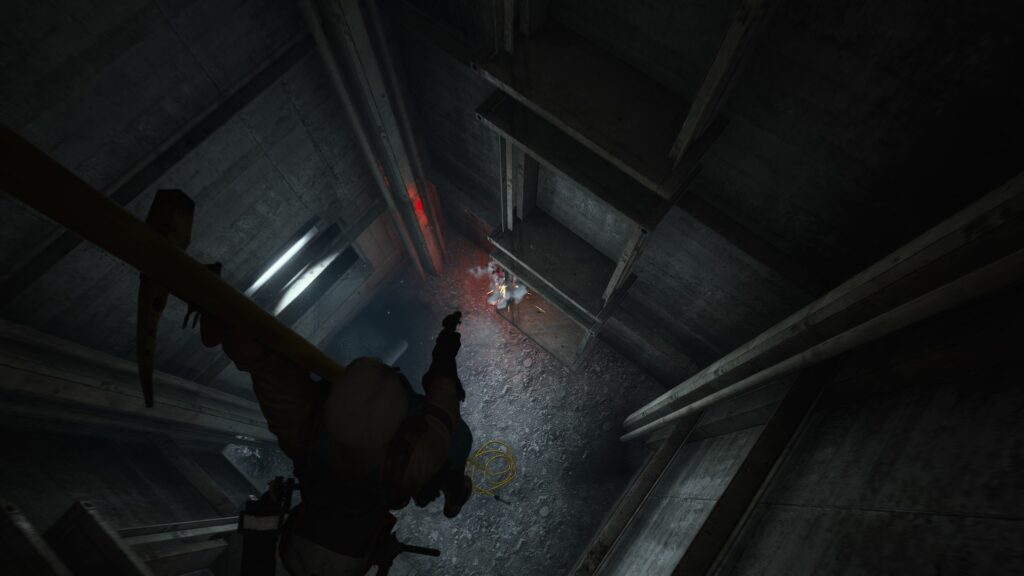
Loot greed often manifests during combat. Players will risk a revive or a dangerous push just to get back to a loot bag they dropped. This is the “Sunk Cost” trap. In Arc Raiders, gear is replaceable; a failed extraction is a total loss of time and resources. You must learn to “orphan” loot if the tactical situation becomes too dangerous. If a sniper is watching a high-value bag, that bag is no longer loot—it is bait. A veteran raider recognizes the trap and chooses to extract with their life rather than dying for a legendary component.
This discipline extends to “clearing” areas. You don’t need to open every crate in a facility. If you have found two rare items, the facility is a success. Continuing to search increases the chance of a third party hearing you. By treating loot as a “means to an end” rather than the end itself, you maintain your tactical edge. You are a raider, not a janitor; your job is to extract wealth, not to vacuum the map. Mastery of this restraint ensures that your stash grows steadily while greedier players provide the “free loot” for the rest of the zone.
The “Safe-Loot” Loop vs. The “Gambler’s” Push
Successful long-term progression is built on the “Safe-Loot” loop: entering, hitting a known high-density spot, and leaving immediately. This is predictable and repeatable. The “Gambler’s Push” is staying in a Hot Zone for twenty minutes hoping for a rare drop that might not even spawn. To master your greed, you must embrace the boredom of the safe loop. It provides the financial foundation that allows you to occasionally take big risks for fun, rather than taking big risks out of necessity. Consistency is the true endgame of stash management.

By controlling your greed, you become a more unpredictable and elusive player. You are often gone before other teams even realize the area has been looted. This “ghost” playstyle is only possible when you have the discipline to stop searching and start extracting. Integrating these cutoff rules into your daily routine ensures that you consistently “win” your raids by actually making it home, providing a stable path to wealth through the power of strategic restraint in the Exclusion Zone.
Conclusion: Extraction as the Final Metric
Loot greed mastery rewards the disciplined and the objective-focused. By setting clear value thresholds and strictly adhering to match timers, you ensure that your efforts always result in a deposit into your stash. Integrating these gathering habits into your routine transforms you from a vulnerable scavenger into an efficient raider, providing a consistent path to wealth by knowing exactly when to stop searching and start leaving.
Leave a Reply